
The Sec 1 Math Transition: A Guide to Choosing the Right Support
Understand the Sec 1 math transition — what changes, why students struggle, and how to evaluate support options regardless of format.
The Educator's Insight
"The jump from Primary to Secondary math is the single biggest transition in Singapore's math education journey. Students who do not address foundational gaps in the first 6 months of Sec 1 will carry those gaps all the way to the O-Levels."
Mrs. Heng
Senior Math Educator (MOE Alumna)
The Sec 1 Math Transition
Secondary 1 is the year when Singapore's math curriculum makes its most dramatic leap. In a single academic year, students shift from:
- ▸Model Drawing → Algebraic Manipulation
- ▸Whole Number Operations → Integer Arithmetic (with negatives)
- ▸Simple Fractions → Rational Numbers
- ▸Basic Geometry → Congruence, Similarity, Pythagoras
For many students — especially those who did well in PSLE with consistent support — this transition exposes foundational gaps that were not visible at the primary level.
What Makes Sec 1 Math Different
The Algebra Barrier
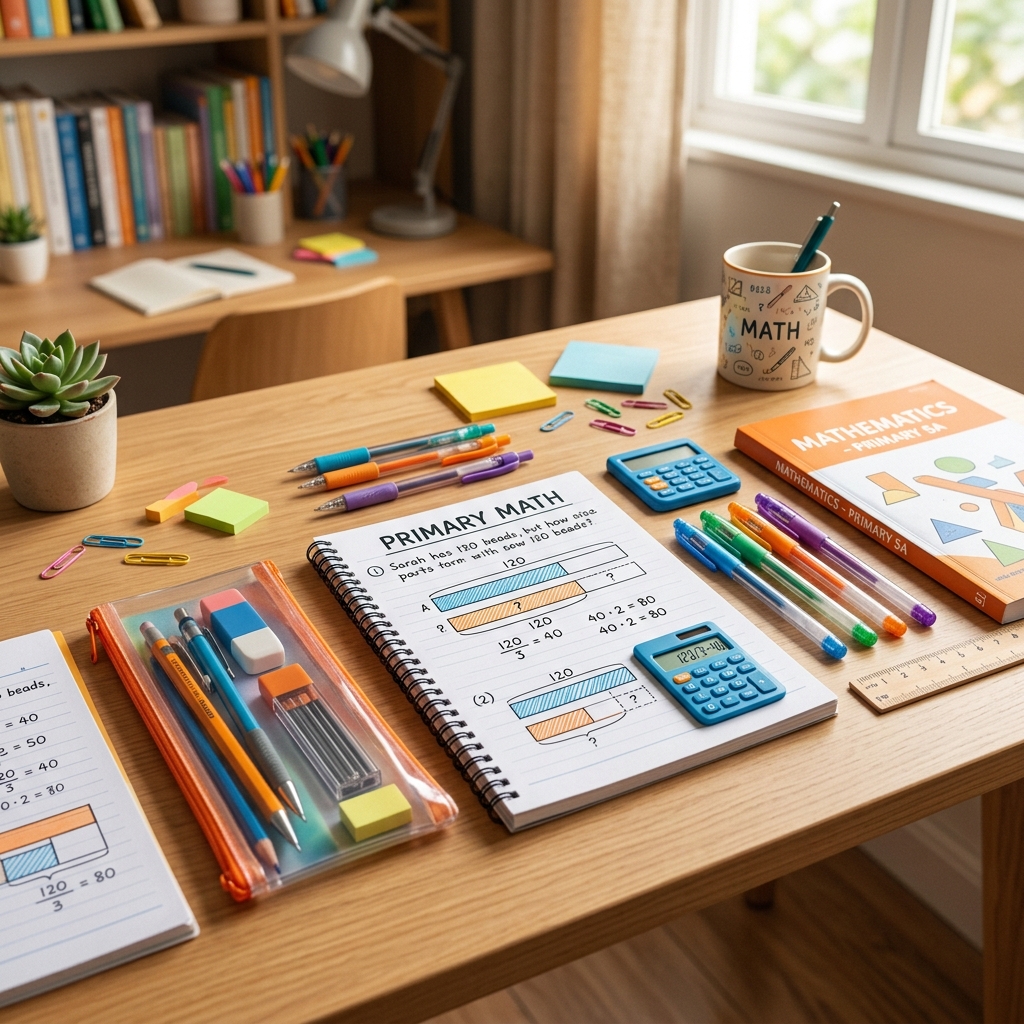
Primary math is concrete. Students draw bar models to visualise relationships. Algebra, by contrast, is abstract — variables have no physical meaning. A student who excelled at model drawing may struggle because the cognitive mode is fundamentally different.
The challenge is not just learning new rules. It is developing a new way of thinking about quantities. This takes time and practice.
For free, curriculum-aligned practice on Sec 1-2 algebra topics — including algebraic expansion, factorisation, and equation solving — visit the ReLURN practice hub. Each topic includes sample questions with Socratic hints and exam-frequency tracking.
Cumulative Gaps
Sec 1 content assumes mastery of P5 and P6 topics. A student who has gaps in fractions, ratio, or basic geometry from primary school will find those gaps resurface — often unexpectedly — in Sec 1 algebra or proportion questions.
For example, algebraic fractions require the same fraction arithmetic skills from P5, but with variables instead of numbers. If the fraction skills are not automatic, the algebra becomes doubly difficult.
Increased Volume
The Sec 1 syllabus introduces multiple new topic areas simultaneously. Students must keep up with algebra, geometry, statistics, and number theory all in one year. Falling behind in one area can cascade.
The Most Difficult Sec 1 Topics
Algebra: Substitution and Simplification
The biggest jump. Common errors include incorrect order of operations (BIDMAS), sign errors when expanding brackets, and confusing like terms with unlike terms.
A useful starting point is substitution practice — plugging numbers into algebraic expressions — before moving to simplification. This builds familiarity with the notation before adding the complexity of manipulation.
Linear Equations
Solving for x requires understanding mathematical balance. Many students memorise steps (move the number, change the sign) without understanding why the steps work. When the equation is non-standard — containing fractions or brackets — the memorised steps fail.
Integer Operations
Negative numbers are responsible for a large number of Sec 1 errors. The rules for adding, subtracting, multiplying, and dividing negatives are counterintuitive to students who have only worked with positive whole numbers.
Rate and Proportion
This topic builds directly on P6 ratio. Students with ratio gaps will struggle with the more abstract Sec 1 proportion questions. A diagnostic that checks P5-P6 ratio and fraction skills can prevent difficulties here.
Evaluating Support Options
When choosing support for Sec 1 math, the format matters less than whether the program addresses the actual transition challenges. Here is what to look for:
Does it diagnose primary-level gaps?
The most common reason Sec 1 support fails is that it teaches Sec 1 content without addressing P5-P6 gaps. A program that assesses prerequisite knowledge before starting is more likely to be effective.
Does it provide enough practice volume?
Algebra requires repetition. A student needs to simplify dozens of expressions and solve dozens of equations before the steps become automatic. A weekly session that covers 10–15 questions provides explanation but may not provide enough practice for true fluency.
Does it give timely feedback?
Algebra errors compound quickly. A sign error in the first step of an equation affects every subsequent step. If feedback arrives days later — at the next session — the student has spent the intervening time practising the wrong method.
Does it track progress by topic?
A student may master substitution quickly but struggle with equation solving for weeks. A system that tracks which specific topics are mastered helps allocate practice time efficiently.
Practical Steps for Parents
Before Sec 1 starts: Run a diagnostic that checks P5-P6 algebra prerequisites — fractions, ratio, decimals, and basic equation solving. Identifying these gaps early prevents them from blocking Sec 1 content.
First term of Sec 1: Focus on building algebra fluency. Daily practice — even 15 minutes — on substitution and simplification builds the foundation for everything that follows.
Monitor for hidden gaps: If your child struggles with a Sec 1 topic, check whether the underlying primary-level skill is solid. A student who cannot solve algebraic fractions may simply need more fraction practice.
Making a Decision
The right support for Sec 1 depends on the specific gap. A student who understands concepts but lacks practice volume needs more practice opportunities. A student who cannot grasp algebraic notation needs explanation and scaffolding.
No single format is universally best. The key is identifying what your child actually needs before choosing a solution. A diagnostic-first approach — understanding the problem before selecting the tool — saves time and money and leads to better outcomes.

Loading comments...
Practice & Tools
Share this article